
Masonry sand is a fine, clean sand used when a smooth finish, workable mix, or neat joint appearance matters. Across Dallas–Fort Worth, it goes into the brick and stone veneer that fronts thousands of new homes every year, from Mansfield and Burleson to Frisco and Prosper, as well as paver joints, backyard pool bases, and play areas. Understanding how it differs from other sand types helps North Texas homeowners, contractors, and DIY builders choose the right material before the first bag or bulk load is delivered.
What makes masonry sand different?
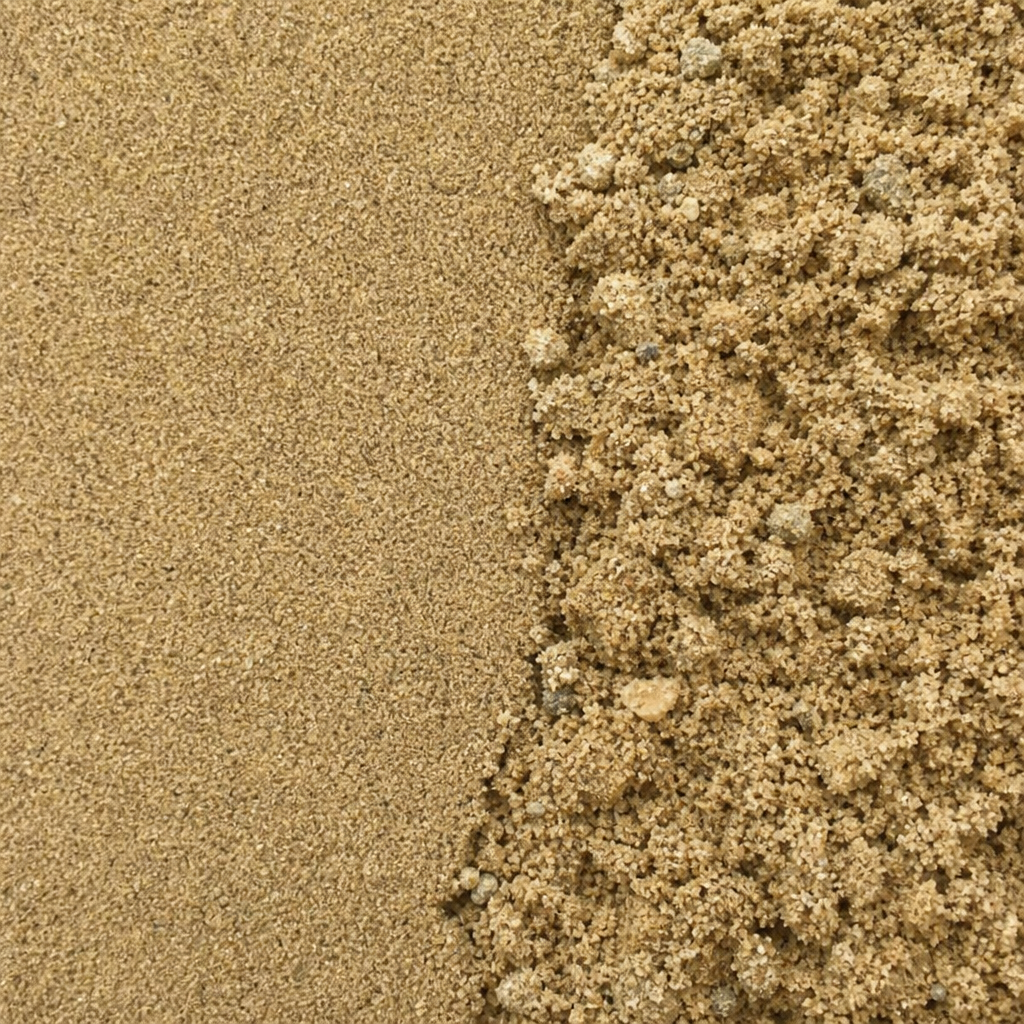
Masonry sand is different because it is screened to a finer, more consistent texture and is often washed to remove excess dust, clay, rocks, and debris. That cleaner, finer grain profile makes it easier to blend into mortar, spread into joints, and level across surfaces that need a more refined finish. When people refer to mortar sand, washed masonry sand, or fine masonry sand, they are often describing closely related materials intended for smooth masonry and finishing work.
The key benefit is workability. A mason needs mortar that spreads evenly, holds shape, and fills the spaces between brick, block, or stone without gritty clumps getting in the way. Coarser sand can make a mix feel harsh, while properly graded masonry sand helps create a more uniform texture. That matters on a DFW jobsite in August, when crews are working in triple-digit heat and mortar stiffens quickly on the board.
The main benefits on construction projects
The right sand can make a visible and practical difference. Masonry sand is not just “small sand”; it is selected because its texture supports cleaner application, smoother finishing, and easier handling in detail-oriented work.
Important benefits include:
- Smoother mortar joints: Fine grains pack neatly into joints, helping create a cleaner appearance on the brick, stone, and veneer work that dominates DFW home exteriors.
- Better workability: A consistent texture helps mortar spread and tool more easily, which can save frustration during placement.
- Cleaner material: Washed masonry sand is processed to reduce unwanted debris, making it better suited for visible and touch-friendly applications.
- Versatile finishing use: It works well for paver joints, sandbox areas, pool bases, and other places where coarse sand would feel rough or look uneven.
- Comfort underfoot or by hand: Fine masonry sand is softer than angular base sand, which is why it is a popular choice for backyard sandboxes and play areas from Keller to Cedar Hill.
These benefits matter most in projects where the finish is part of the final result. A hidden compacted base, especially over the expansive clay soils common across Tarrant and Dallas counties, may need a stronger, more angular material, but a visible joint or smooth bedding layer often benefits from a finer sand.
Masonry sand and concrete sand serve different purposes
One common mistake is assuming all construction sand can be used interchangeably. Masonry sand and concrete sand may look similar from a distance, but they behave differently once they are mixed, compacted, or spread.
Concrete sand is typically coarser and more angular. Those rougher particles can lock together more firmly, which is useful in concrete mixes, drainage layers, and base applications that need stability, the kind of slab and flatwork pours DFW builders run year-round. Masonry sand, by contrast, is finer and smoother, making it better for mortar, joints, and finish layers but generally less suitable as a heavy-duty structural base.
Use this simple comparison when choosing:
| Project need | Better choice | Why it fits |
|---|---|---|
| Brick or block mortar | Masonry sand | Fine texture supports smooth, workable mortar |
| Paver joint filling | Masonry sand | Sweeps into narrow joints and finishes cleanly |
| Patio or walkway base | Concrete sand or base material | Coarser particles improve support and drainage over North Texas clay |
| Sandbox or play area | Washed masonry sand | Softer, cleaner texture is more comfortable |
| Concrete mix | Concrete sand | Coarser gradation supports concrete strength and structure |
| Pool base smoothing | Fine masonry sand | Creates a smooth, cushion-like layer under above-ground pool liners |
The best choice depends on the function of the layer. If the sand must help carry weight, drain quickly, or resist shifting under a slab or paver system, a coarser material may be the better fit. That is especially true in North Texas, where black clay soils swell after spring storms and shrink during summer drought. If the sand must fill small spaces, create a smooth finish, or mix into mortar, masonry sand is usually the more practical option.
How much masonry sand do you need?
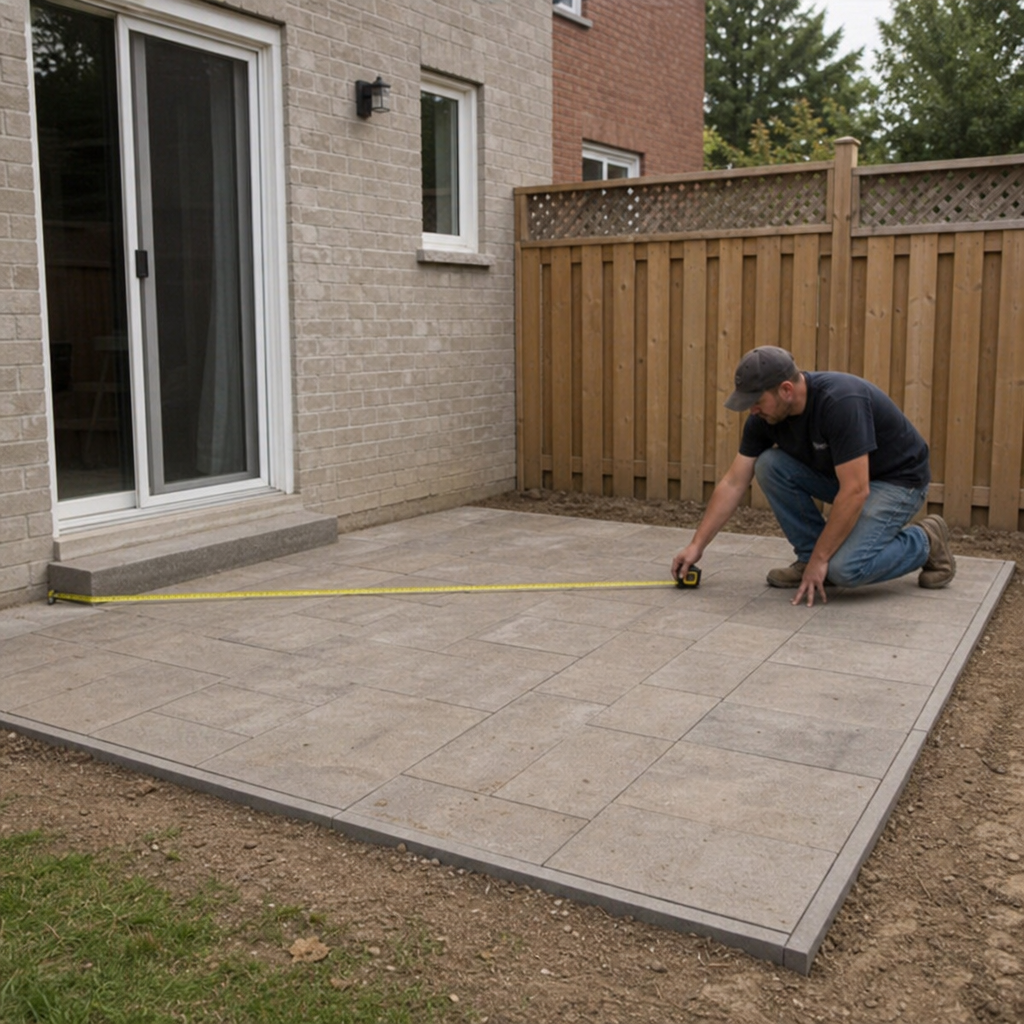
You can estimate masonry sand by calculating the area, the desired depth, and the volume required, then adding a small allowance for compaction, uneven ground, or waste. As a general planning guide, one cubic yard of sand weighs roughly 2,400 to 2,600 pounds and covers about 320 to 330 square feet at a 1-inch depth, or about 160 to 165 square feet at a 2-inch depth. Actual coverage can vary based on moisture, compaction, surface shape, and how the material is installed.
A simple formula is:
- Measure the project length and width in feet.
- Multiply length × width to get square feet.
- Convert depth from inches to feet by dividing by 12.
- Multiply square feet × depth in feet to get cubic feet.
- Divide cubic feet by 27 to convert to cubic yards.
- Add extra material if the base is uneven or the sand will be compacted.
For example, a 12-foot by 16-foot patio in an Arlington or Fort Worth backyard at 2 inches deep is 192 square feet. Two inches equals 0.167 feet. That equals about 32 cubic feet, or roughly 1.2 cubic yards before any extra allowance.
This approach is more reliable than guessing by the bag, especially for patios, play areas, or larger joint-filling projects. If you are ordering bulk masonry sand, ask the supplier how they sell it, whether by cubic yard, ton, or truckload, and whether moisture content may affect the delivered weight. Sand stockpiled through a week of North Texas thunderstorms can weigh noticeably more per yard than the same pile in a dry August.
Common uses for masonry sand
Masonry sand earns its place on job sites because it solves several finishing and mixing needs. It is not the answer to every base or drainage problem, but it is highly useful when texture and consistency matter.
Mortar for brick, block, and stone
The classic use for masonry sand is mortar. Its fine, even particles help the mortar blend with cementitious materials and water into a workable mix. This makes it easier to spread on masonry units, press into joints, and tool to the desired profile.
Good mortar work depends on more than sand alone, of course. The right mix proportions, water content, weather conditions, and installation method all affect performance. In DFW, weather is the big variable. Industry hot-weather masonry provisions (TMS 602) apply once temperatures top 100°F, or 90°F with wind above 8 mph, conditions that are routine from June through September. Typical steps include shading the sand pile, keeping materials cool and damp, and mixing smaller batches. At the other end of the year, occasional hard freezes, like the February 2021 winter storm, call for cold-weather protection. Still, starting with suitable mortar sand helps avoid unnecessary problems such as gritty joints, poor finish quality, or inconsistent texture.
Paver joints and surface finishing
Masonry sand can be swept into joints between pavers where a fine, clean appearance is desired. It settles into narrow gaps more easily than coarser sand and can help create a tidy finished surface. For some interlocking paver systems, however, the base and bedding requirements may call for different materials, so it is important to follow the project specifications.
This is where sand selection becomes more than a cosmetic decision. A patio in Fort Worth, Grand Prairie, or Plano may need a compacted aggregate base for strength, a bedding layer for leveling, and a joint material for finish. Because so many DFW neighborhoods sit on expansive clay, the base layer does much of the work of keeping pavers from heaving and settling. Masonry sand may be appropriate for one layer but not all of them.
Play areas, pool bases, and landscape details
Washed masonry sand is often used where people will touch or walk on the material. It can create a softer surface in sandboxes, under above-ground pool liners (a popular backyard upgrade across the Metroplex), or around landscape features that need a neat visual finish. Because it is screened and washed, it is generally cleaner and more comfortable than rougher construction sands.
For play areas, quality matters. Look for sand that is clean, free of sharp debris, and appropriate for the intended use. For pool bases, the goal is usually a smooth, even layer that protects the liner from stones or irregularities below.
Quality signs to look for before buying
Not every pile of sand sold under a familiar name will perform the same. Local geology, screening standards, washing methods, and storage conditions can all affect texture and cleanliness. Much of the natural sand sold in North Texas comes from river and terrace deposits along the Trinity and Brazos river systems, and material from different pits can vary in color, grain shape, and clay content. Before placing an order, it helps to know what good masonry sand should look and feel like.
Use this buying checklist:
- Consistent fine texture: The sand should feel smooth and uniform, not full of large stones or harsh grit.
- Clean appearance: Avoid material with obvious clay clumps, trash, roots, or excessive silt.
- Right moisture expectation: Damp sand is normal in bulk piles, but very wet sand can affect handling and weight.
- Suitable label: Ask whether it is masonry sand, mortar sand, washed masonry sand, or fine masonry sand, and confirm the intended use.
- Clear delivery options: For larger projects, ask about minimum loads, delivery fees by zone, placement access, and whether the truck can safely reach the drop area. In newer subdivisions from Haslet to Midlothian, also check HOA rules on driveway drops and street parking.
- Project compatibility: If you are following a building plan, paver specification, or mortar mix requirement, match the sand to that guidance.
A quick conversation with the supplier can prevent mismatched materials. If you are unsure, describe the project rather than asking for sand by name only. “I need sand for brick mortar” or “I need a smooth layer under an above-ground pool” gives the supplier more context than a generic request.
Where to buy masonry sand with confidence
If you are searching for where to buy masonry sand in Dallas–Fort Worth, start with landscape supply yards, construction aggregate suppliers, masonry suppliers, and building material centers across the Metroplex. These sellers are more likely to stock sand in bulk, understand local material names, and help match the product to the job. Searching for masonry sand near me or masonry sand Fort Worth can be useful, but it is still worth calling to confirm availability, delivery area, and whether the material is washed and screened.
Bulk buying often makes sense for larger projects because bagged sand can become inconvenient and expensive when you need multiple cubic yards. Bagged material, however, may be better for small repairs, tight storage areas, or jobs where you cannot accept a truck delivery. The best option depends on project size, access, timing, and how much leftover material you can reasonably store or reuse.
Before ordering bulk masonry sand, prepare the delivery area. Choose a firm, accessible location, keep it away from storm drains (city stormwater ordinances across the Metroplex prohibit washing sediment into the street), and use a tarp if you need to protect pavement or prevent contamination. A covered pile also holds up better through a spring downpour. Sand is easier to manage when it is delivered close to the work area, but only if the truck has safe access.
Getting masonry sand delivered across DFW
Where your supplier's yard sits relative to your jobsite affects both delivery cost and timing. A yard in the south-central Metroplex, around Kennedale, south Arlington, and southeast Fort Worth, sits where I-20, US-287, and Loop 820 meet, giving trucks direct runs to most of the region:
- Fort Worth and west Tarrant County: I-20 west and Loop 820 to Benbrook, Crowley, and the Chisholm Trail Parkway corridor, continuing out toward Aledo and Weatherford.
- Arlington, Grand Prairie, and the Mid-Cities: SH-360 and I-20 to Arlington and Grand Prairie, then north to Euless, Bedford, and Hurst.
- Mansfield, Burleson, and Johnson and Ellis counties: US-287 south to Mansfield, Midlothian, and Waxahachie, and I-35W south to Burleson, Joshua, and Cleburne.
- Northeast Tarrant County: Loop 820 and SH-121/183 to North Richland Hills, Keller, Southlake, and Grapevine.
- Dallas and the southern suburbs: I-20 and I-30 east into Dallas, Cedar Hill, Duncanville, and DeSoto, with SH-161 and I-635 reaching Irving and the northern suburbs.
Timing helps too. Scheduling drops outside the morning and evening rush on I-20, I-35W, and I-30 keeps loads moving, and booking early in the week during the spring building season, or right after a run of wet weather when yards get busy, makes it easier to get your preferred delivery window.
A practical way to choose the right sand
The easiest way to avoid confusion is to choose sand by function. Ask what the sand needs to do: bond in mortar, fill a narrow joint, cushion a liner, support a base, or drain water. Once the job is clear, the material choice becomes much easier.
For smooth mortar, clean joints, and finish-friendly surfaces, masonry sand is often the right answer. For load-bearing bases, drainage layers, or concrete mixes, a coarser sand or aggregate may be more appropriate. That distinction helps prevent common problems such as unstable bases, rough mortar, or a finish that does not match the project goal.
Masonry sand brings real value to construction when it is used where its fine texture, clean appearance, and workability matter most. Choose a quality product, estimate your quantity carefully, and buy from a North Texas supplier who can confirm the sand's intended use and deliver efficiently to your side of the Metroplex. The result is a cleaner installation, a smoother finish, and fewer material surprises once the work begins.