

Quality sand is easiest to buy when you match the material to the job before comparing suppliers. This guide explains the best places to find sand for sale, what to ask before ordering, how delivery works, and how to prepare your project so the sand performs the way it should. Whether you are building a paver patio, refreshing a play area, leveling a lawn, or ordering for a larger landscape job, the right source can save you time, waste, and rework.
Where can I buy sand for my project?
You can buy sand from landscape supply yards, masonry suppliers, home improvement stores, garden centers, aggregate quarries, and online bulk material retailers. The best choice depends on how much you need, what type of sand the job requires, whether you can haul it yourself, and whether you need local delivery. If you are searching phrases like “where can I buy sand,” “where to buy sand near me,” or “bulk sand near me,” start by narrowing the project first, then compare sellers that clearly list sand type, texture, delivery area, and ordering requirements.
A small sandbox refill may only require bagged play sand from a retail store. A paver base, walkway, masonry job, or landscape grading project usually calls for bulk sand sold by the ton, cubic yard, or truckload. Buying from the right type of supplier helps you avoid paying for convenience when you need volume, or ordering a large delivery when a few bags would be easier.
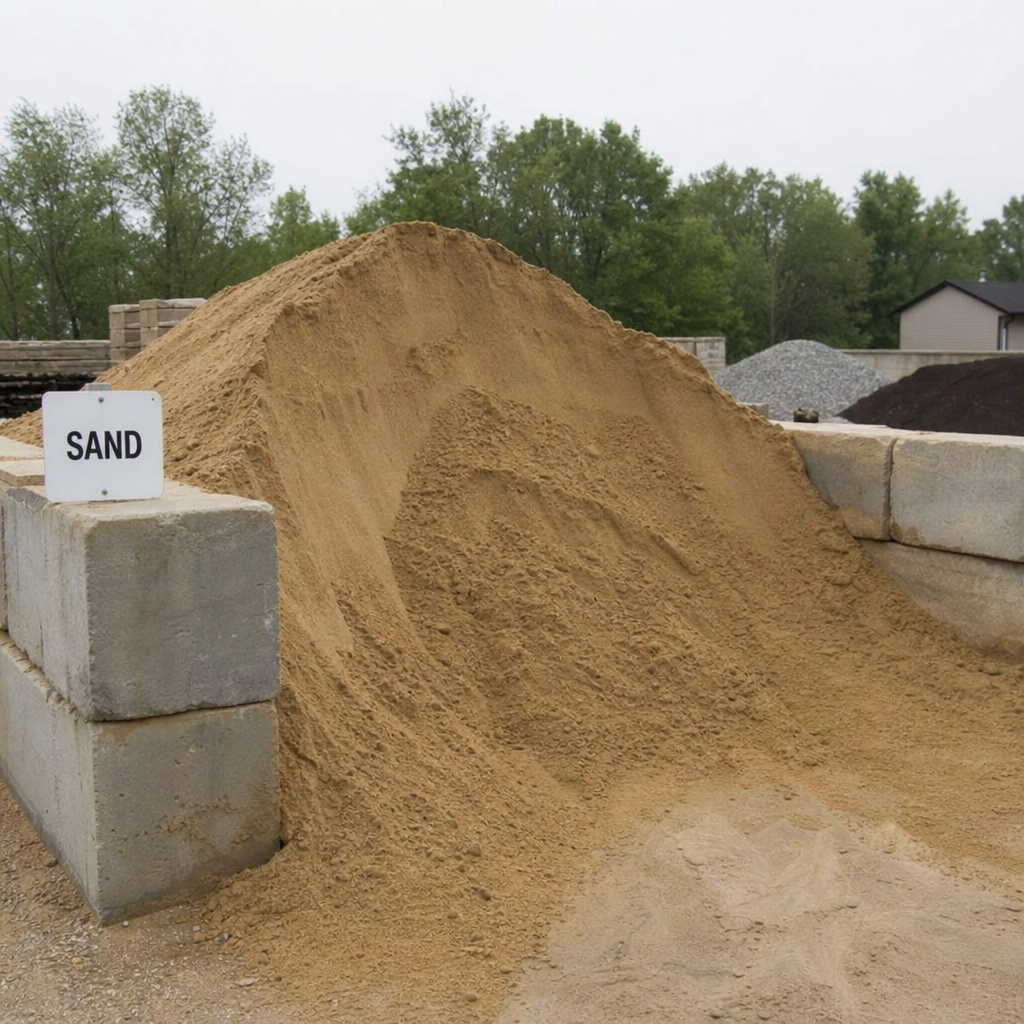
The best places to find quality sand
Different sellers serve different needs. Some are better for DIY convenience, while others are built for contractors, landscapers, and homeowners ordering a full delivery. Before you buy sand, compare the source as carefully as the price.
Landscape supply yards
Landscape supply yards are often the most practical option for homeowners who need sand for patios, lawns, gardens, edging projects, or drainage work. They typically carry common materials such as masonry sand, concrete sand, fill sand, topsoil, gravel, mulch, and stone, making it easier to order multiple products from one place.
These suppliers are also used to local delivery. If you search for “sand delivery near me,” many of the strongest results will be local landscape yards with dump truck service. Ask whether they deliver loose material to residential driveways, how much space the truck needs, and whether they can place the load in a specific spot.
Masonry and building material suppliers
Masonry suppliers are a strong choice when the sand will be used for mortar, bricklaying, block work, stucco, or paver installation. They tend to understand grain size, cleanliness, and consistency because those details affect how mixes bond, level, and drain.
If your project involves brick, stone, concrete, or pavers, a masonry supplier may give more precise guidance than a general retailer. Tell them exactly what you are building and ask which product they recommend for bedding, joint filling, or mixing. A slightly different sand texture can change how well your surface compacts or how smoothly mortar works.
Home improvement stores
Large home improvement stores are convenient when you need bagged sand quickly. They are useful for small repairs, weighted bases, small sandboxes, craft projects, minor leveling, or topping off an existing area. You can often pick up bags the same day without scheduling delivery.
The tradeoff is cost and quantity. Bagged sand is simple to handle, but it can become expensive and labor-intensive for larger projects. If you need dozens of bags, it may be time to compare where to buy sand in bulk instead.
Garden centers and nurseries
Garden centers may carry sand for soil improvement, lawn leveling, drainage blends, or small landscape jobs. They are especially helpful when your sand purchase is part of a planting or turf project because staff may understand how sand interacts with local soil conditions.
For garden use, do not assume any sand will work. Some sands drain quickly, while others compact too tightly or contain unwanted fines. Ask whether the product is suitable for mixing into soil, topdressing, or preparing a sod bed.
Quarries and aggregate suppliers
Quarries and aggregate suppliers are often best for larger orders, commercial jobs, or projects where price per ton matters. They may sell sand, gravel, crushed stone, and specialty aggregates directly or through local haulers. This can be a cost-effective option if you need a large amount and understand the exact product required.
However, quarries may have minimum order sizes, limited retail service, or truck access requirements. If you are a homeowner, ask whether they sell to the public, whether pickup is allowed, and whether they can recommend a hauler if they do not deliver directly.
Online bulk material marketplaces
Online ordering can be useful if you want to compare products, schedule delivery, and estimate quantities without calling several suppliers. Some platforms connect buyers with local yards or haulers, while others sell directly in specific regions.
Use online listings carefully. Product names vary by region, so “mason sand,” “concrete sand,” “sharp sand,” and “fill sand” may not mean exactly the same thing everywhere. Look for clear descriptions, photos, coverage calculators, delivery rules, and customer service options before placing an order.
Matching sand type to the job
The most common buying mistake is choosing sand by price alone. Sand can look similar in a pile, but grain shape, size, cleanliness, and drainage make a big difference once it is installed. Use the table below as a starting point, then confirm with your supplier before ordering.
| Sand type | Texture and traits | Common uses | Buying tip |
|---|---|---|---|
| Mason sand | Fine, clean, smooth | Bricklaying, mortar work, sandboxes, volleyball courts, infill | Choose when a softer, cleaner finish matters |
| Concrete or masonry sand | Coarser, more angular | Paver bases, bedding layers, leveling, drainage-friendly applications | Good when compaction and stability are important |
| Yellow bar sand | Fine and versatile | Masonry work, soil amendment, cleanup tasks | Ask whether it is appropriate for your exact mix or landscape use |
| Fill sand | Economical, less refined | Raising grades, filling low areas, backfilling | Best for utility, not finished surfaces |
| Slag sand | Processed industrial byproduct, varies in appearance | Fill, base, or specialty uses depending on region | Confirm suitability and local availability |
| Play sand | Screened and fine | Sandboxes and children’s play areas | Look for clean, purpose-labeled material |
For paver patios and walkways, a coarse, angular sand is usually better for bedding and leveling because it can lock in more firmly than very fine sand. For bricklaying or mortar, a clean mason sand is often preferred because it blends smoothly. For a sandbox, cleanliness and intended use matter more than compaction.
How much sand should you order?
The amount you need depends on area, depth, compaction, and waste. For small bagged purchases, the package may list coverage. For bulk sand, suppliers often use cubic yards or tons, and many provide a calculator to estimate the order.
A simple planning process helps prevent both shortages and overbuying:
Measure the area. Multiply length by width to estimate square footage for a rectangle or break an irregular space into smaller sections.
Choose the depth. A thin leveling layer may need much less material than a base, fill, or play area.
Convert to volume. Use the supplier’s calculator when available because material density can vary.
Account for compaction. Bedding and base layers may settle after spreading and tamping.
Add a modest buffer. A small allowance helps cover uneven ground, edges, and measuring errors.
If you are unsure, call the supplier with your measurements before ordering. A reputable seller will not be able to design the entire project for you, but they can often help translate your area and depth into a practical order size.
What should you ask before ordering bulk sand?
Before ordering bulk sand, ask what type of sand is recommended for your project, how it is sold, what the minimum order is, and whether delivery is available to your address. Also confirm where the load will be dropped, whether the truck can access your property, and whether the quoted price includes delivery or fuel charges. These questions matter because bulk material is difficult to move once it arrives, and returning the wrong sand is rarely simple.
Here is a quick checklist to use when comparing suppliers:
Product name and use: Is the sand suitable for pavers, masonry, play areas, soil amendment, or fill?
Screening and cleanliness: Has it been screened, washed, or processed for the intended application?
Unit of sale: Is it sold by bag, cubic yard, ton, pallet, or truckload?
Minimum order: Is there a minimum for pickup or delivery?
Delivery area: Do they offer sand delivery near me, and what days are available?
Drop location: Can the truck dump on your driveway, curbside, jobsite, or another safe area?
Access needs: Are there limits for narrow streets, steep driveways, overhead wires, or soft ground?
Moisture and weight: Is the sand wet or dry, and can that affect handling or weight?
Price matters, but clarity matters more. A vague listing for cheap sand can become expensive if it is the wrong texture, arrives late, or gets dropped somewhere you cannot use it.
Preparing your site before the sand arrives
Good preparation makes the sand easier to spread and improves the finished result. Clear the area before delivery so you are not moving material around tools, weeds, roots, toys, or debris. If the sand will be used under pavers, establish your grade and edge restraints before placing the bedding layer.
For lawn or garden projects, remove debris and address weeds before spreading sand. If you are amending soil, avoid simply dumping a thick layer on top; mixing a limited amount into the existing soil is usually more effective than creating a separate layer. Where planting or sod is involved, ask whether fertilizer or additional organic matter is needed for the specific soil conditions.
For sod preparation, the surface should be flat, firm, and free of large air pockets. After installation, water carefully and limit walking or mowing until the turf has had time to settle and root. Rushing those steps can create uneven spots that are much harder to fix later.
Smart buying tips for better results
When searching “where to buy sand in bulk,” do not stop at the nearest listing. Local availability can vary widely, and suppliers may use different names for similar products. A five-minute call can prevent a full load of the wrong material.
Use these tips before committing:
Describe the project, not just the product. Say “I’m installing a paver walkway” or “I’m filling a sandbox,” not only “I need sand.”
Ask for the right texture. Fine sand, coarse sand, and angular sand behave differently under pressure and water.
Check delivery logistics early. Bulk sand takes space, and the drop zone should be clear, firm, and accessible.
Compare total cost. Include delivery, minimums, taxes, and any extra hauling or equipment you may need.
Order at the right time. Schedule delivery after the site is ready, not days before you can use the material.
Protect nearby surfaces. Use tarps or boards if you need to keep driveways, lawns, or finished hardscapes cleaner.
Common mistakes to avoid
The biggest mistake is treating all sand as interchangeable. Mason sand may feel great under bare feet, but it may not be the best structural bedding for a paver base. Fill sand may be affordable, but it is not the right choice for a children’s play area unless it is specifically sold and confirmed for that use.
Another common issue is underestimating labor. A bulk delivery is convenient, but the sand still has to be moved, spread, leveled, and compacted if the project requires it. Make sure you have shovels, wheelbarrows, rakes, screeds, compactors, or helpers ready before the truck arrives.
Finally, avoid ordering before you know local rules and site limits. Some neighborhoods restrict street dumping, and some driveways cannot handle heavy trucks. Confirm the drop location with both the supplier and anyone else who controls access to the property.
The right place to buy depends on the project
The top place to buy quality sand is the one that matches your project size, sand type, and delivery needs. Choose home improvement stores for small bagged jobs, landscape yards for residential bulk orders, masonry suppliers for brick and paver work, garden centers for soil-related projects, and quarries or aggregate suppliers for larger loads.
If you are still asking “where to buy sand near me,” start with your project requirements, then compare local sources that explain their products clearly. The right sand, ordered in the right quantity and delivered to the right spot, can make the rest of the job smoother from the first shovel to the final finish.