
Finding the right local stone supplier can make a driveway, patio base, drainage project, or landscape refresh much easier to plan. The best choice is not always the closest yard on the map; it is the supplier that offers the right material, clear pricing, reliable delivery, and practical guidance for your specific job. If you have been searching for crushed stone near me, this guide will help you compare nearby options with more confidence.
Where can I buy crushed stone near me?
You can usually buy crushed stone from landscape supply yards, gravel pits, quarries, masonry suppliers, garden centers, and some home improvement stores. For larger projects, local quarries and dedicated aggregate suppliers often provide more product variety, bulk pricing, and delivery options. For smaller projects, a garden center or retail yard may be more convenient because you can buy by the bag, bucket, scoop, or partial cubic yard.
A good place to start is by searching for crushed stone suppliers near me and then narrowing the results based on what you need the stone to do. A decorative garden border requires a different product than a compacted driveway base. A drainage trench may need clean, washed stone, while a walkway base may need a compactable crushed aggregate with fines.
Before you call, write down your project type, approximate square footage, desired depth, and whether you need pickup or delivery. This helps the supplier recommend the right material and estimate how much you need.
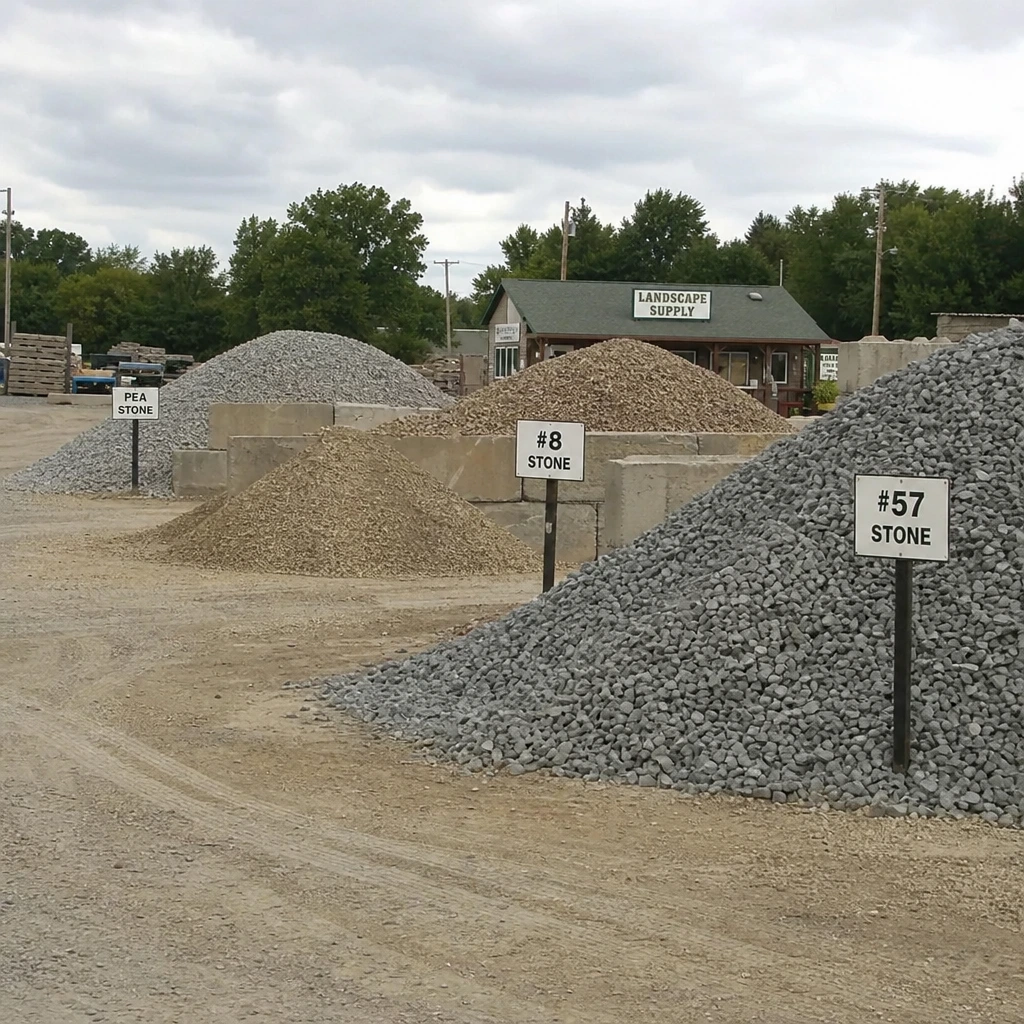
The best supplier fits the project, not just the search result
Typing where to buy crushed stone near me into a search engine can produce plenty of options, but the closest listing may not be the best match. Quality suppliers help you choose stone based on performance, appearance, size, and installation requirements. They should be able to explain the difference between decorative crushed landscape rock, compactable base material, drainage stone, and limestone gravel.
Distance still matters, especially if you need delivery. Hauling rock is heavy work, and delivery fees often depend on mileage, truck type, access, and order size. A slightly farther supplier with better product knowledge, cleaner material, and dependable scheduling may save you time and frustration.
When comparing options, look for signs that the business regularly serves homeowners, contractors, landscapers, or all three. Suppliers used to working with many customer types tend to be better at explaining quantities, access requirements, and realistic delivery expectations.
Common crushed stone options and how they are used
Crushed stone is not one single product. It comes in different rock types, sizes, colors, textures, and blends. Understanding the basics makes it easier to ask useful questions and avoid ordering material that looks right but performs poorly.
Crushed stone for driveways and parking areas
Driveways usually need a compactable aggregate that locks together under pressure. This may include a mix of crushed rock and smaller particles, often called fines, screenings, or dust depending on the region. The fines help fill voids between larger pieces, creating a firmer surface when properly installed and compacted.
If you search for crushed rock near me for a driveway project, ask whether the product is intended as a base, top layer, or general fill. A clean decorative stone may look attractive, but it can shift under tires if it does not compact well. A reputable supplier can help you choose a practical layer system instead of treating all rock as interchangeable.
Crushed landscape rock for curb appeal
Crushed landscape rock is often used around planting beds, walkways, patios, fire pits, dry creek beds, and foundation edges. It can create a clean, low-maintenance appearance while helping reduce exposed soil. Color, size, and texture matter more in visible landscape areas than they do in utility applications.
When selecting decorative stone, view it in person if possible. Photos can be affected by lighting, moisture, screen settings, and dust on the rock. Ask whether the supplier has a sample pile, display area, or small quantity you can take home before committing to a large delivery.
Limestone gravel for practical projects
Many homeowners search for limestone gravel near me because limestone is widely used for driveways, base layers, paths, drainage, and general construction. It is often valued for its ability to compact in certain blends and its neutral, natural appearance. However, availability and product names vary by region, so it is better to describe your intended use than to rely only on a product name.
If you need limestone for a specific purpose, ask about gradation, dust content, and whether the product is washed or unwashed. Washed stone is often preferred where drainage is important, while compactable limestone products may include smaller particles that bind together.
What should you ask before ordering crushed stone?
Before placing an order, ask the supplier about material size, intended use, delivery access, minimum quantities, and how they calculate volume or weight. A short conversation can prevent common problems such as ordering too little, choosing the wrong grade, or scheduling a truck that cannot safely access your property.
Use this checklist when calling local suppliers:
- What material do you recommend for my project? Explain whether you are building a driveway, base, walkway, drainage area, patio foundation, or decorative bed.
- Is the stone clean, washed, compactable, or decorative? These terms affect drainage, stability, appearance, and installation.
- How is it sold? Suppliers may sell by the ton, cubic yard, scoop, bag, or truckload.
- What size is the stone? Ask for the approximate size range, not just the product name.
- Do you deliver to my location? Confirm delivery fees, scheduling windows, truck size, and dumping location.
- Is there a minimum order? This matters if your project is small or if access limits the delivery amount.
- Can I see the material first? A visit or sample helps you judge color, dust, and texture.
- What site preparation is needed? Some projects require excavation, edging, fabric, grading, or compaction.
These questions also help you evaluate customer service. A supplier that gives rushed, vague, or dismissive answers may not be the best partner for a project that depends on the right material.
How to compare crushed stone suppliers nearby
Once you have a list of nearby options, compare them on more than price. Stone is heavy, delivery is logistical, and product quality affects the finished result. A low material price may not be a bargain if the product is inconsistent, dusty, poorly suited to the project, or expensive to deliver.
Consider these factors before choosing a supplier:
- Product range A broader selection makes it easier to match the stone to the project. Look for suppliers that carry base material, drainage stone, decorative rock, limestone options, and different sizes.
- Clear descriptions Good suppliers explain what each product is used for. If the yard uses local names, they should still be able to describe size, texture, and performance.
- Delivery reliability Ask how far ahead you should schedule, whether they call before arrival, and where the truck can dump. Delivery planning is especially important if you are coordinating labor, equipment, or a weekend project.
- Material consistency Stone color and size can vary, especially between sources. For visible areas, confirm that the material you see is similar to what will be delivered.
- Helpful estimating support While you are responsible for final measurements, a knowledgeable supplier can help convert square footage and depth into an estimated order quantity.
- Local reputation Reviews, contractor recommendations, and repeat customers can reveal whether the business communicates well and delivers what it promises.
Estimating your order without overcomplicating it
You do not need to be a contractor to estimate crushed stone, but you do need basic measurements. Measure the length and width of the project area, then decide on the depth. Deeper layers are often needed for base and driveway applications, while decorative beds may require less depth depending on the stone size and site conditions.
A simple planning process looks like this:
- Measure the area in feet.
- Multiply length by width to get square footage.
- Choose a depth in inches.
- Ask the supplier to help convert that into cubic yards or tons.
- Add a small allowance for uneven ground, compaction, or shaping if the supplier recommends it.
Avoid guessing from memory or ordering only by visual impression. A pile of stone can look larger or smaller than expected depending on how it is dumped. Accurate measurements make your search for crushed stone near me more productive because suppliers can give better guidance from the start.
Delivery details can make or break the experience
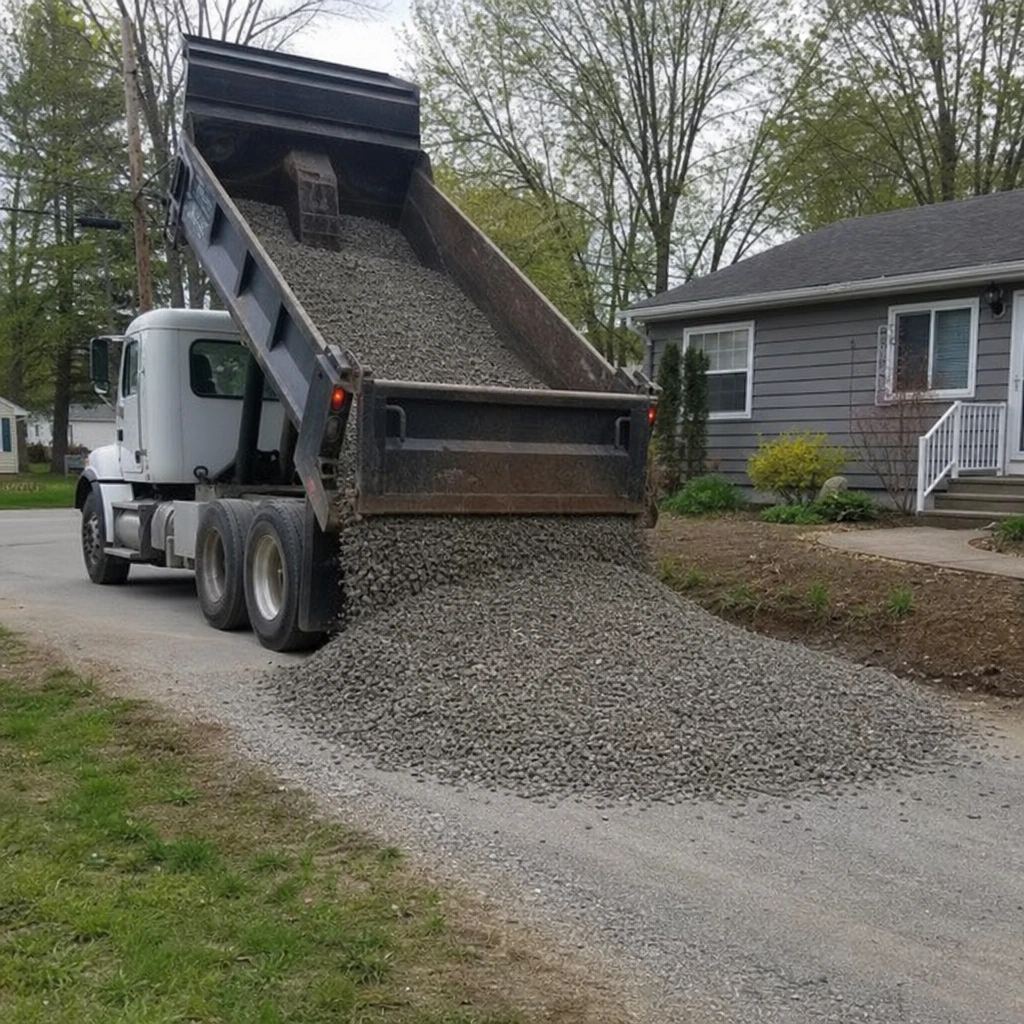
Crushed stone delivery is straightforward when the site is ready. Decide where the material should be dumped before the truck arrives. The location should be accessible, firm, level enough for safe unloading, and away from overhead wires, soft ground, low branches, vehicles, and areas where runoff could spread loose material.
Tell the supplier about narrow driveways, steep grades, gates, low clearances, or restricted streets. A smaller truck may be needed in tight areas, or the driver may only be able to dump at the curb or driveway entrance. Clear expectations protect your property and help the delivery crew work safely.
It is also smart to prepare tarps, wheelbarrows, shovels, rakes, and compaction equipment before delivery day. Once the pile is on-site, you will want to move and shape it efficiently, especially if rain is expected or the material blocks access.
Red flags when choosing a supplier
Most local aggregate businesses are practical, straightforward operations, but it still pays to be selective. Be cautious if a supplier cannot explain what a product is used for, gives inconsistent answers about quantity, or will not clarify delivery fees before scheduling. You should also be wary of listings with little business information, no visible yard or service area, or unclear product photos.
Other warning signs include refusing to discuss truck access, pressuring you into a product without asking about the project, or using vague labels that do not describe size or function. For decorative stone, inconsistent color may be acceptable in some natural materials, but you should know what level of variation to expect. For structural uses, the wrong material can cause settling, shifting, poor drainage, or extra labor.
A smarter way to search locally
Search terms like where can i buy crushed stone near me, crushed rock near me, and crushed stone suppliers near me are useful starting points, but your next step should be a focused comparison. Call two or three suppliers, describe the same project to each one, and note how clearly they respond. You will often learn quickly who understands the material and who is simply taking orders.
If possible, visit the yard before purchasing a large quantity. Seeing the stone in person helps you confirm color, size, cleanliness, and overall appearance. It also gives you a chance to ask practical questions about installation, delivery timing, and whether your chosen material is commonly used for similar projects.
The takeaway for a better crushed stone purchase
Quality crushed stone starts with choosing the right supplier and asking the right questions. The best local source will help you match material to purpose, estimate a reasonable quantity, and plan delivery without unnecessary confusion. Whether you need driveway aggregate, drainage stone, limestone gravel, or crushed landscape rock, a little preparation before ordering can lead to a cleaner installation and a better finished project.