

Whether you are clearing a lot, reworking a driveway, preparing a foundation, or cleaning up after excavation, the right hauling team can keep your project moving and your site safe. Reliable dirt, rock, gravel, and aggregate hauling is not just about finding the closest truck; it is about choosing a provider with the right equipment, communication habits, and understanding of local jobsite needs.
Searching for terms like “dirt hauling near me” or “gravel haulers near me” can give you plenty of options, but the real work is knowing how to sort them. A little preparation before you call can help you avoid delays, surprise costs, and hauling problems that slow down the rest of the project.
What should you look for in dirt hauling services nearby?
Look for a hauling provider that can clearly explain what materials they move, what truck sizes they use, how they price the job, and what information they need before scheduling. A dependable company should ask about access, load volume, material type, site conditions, and timing instead of giving a vague answer without understanding the project.
When you search for dirt hauling services near me, you are usually looking for more than someone with a dump truck. You need a team that knows how to work around driveways, construction entrances, soft ground, tight neighborhoods, and changing jobsite conditions. The best fit is usually a hauler that communicates early, shows up prepared, and understands whether your job calls for removal, delivery, or both.
A reliable provider should also be honest about what they can and cannot haul. Clean fill dirt, clay, topsoil, mixed soil, gravel, crushed stone, riprap, and construction debris may each require different handling. If a company treats every load the same, that can be a warning sign.
Local hauling supports more than construction
Dirt and aggregate hauling is often associated with large construction projects, but local haulers serve a wide range of residential, commercial, agricultural, and municipal needs. A homeowner may need fill dirt removed after a pool installation. A contractor may need base rock delivered before paving. A property manager may need gravel added to a parking area after heavy rain.
That is why searches for dirt hauling companies near me often overlap with searches for rock hauling near me or aggregate hauling services near me. Many projects involve more than one material, and scheduling the wrong type of hauling can create unnecessary downtime. For example, removing excess dirt from a grading job is different from delivering compactable aggregate for a driveway base.
Common uses for local hauling include:
Excavation cleanup: Removing dirt, clay, or mixed soil from foundation, trenching, or utility work.
Driveway and road work: Delivering gravel, crushed stone, or road base for access roads and parking areas.
Drainage improvements: Hauling in rock or aggregate for swales, culverts, French drains, and erosion control.
Landscape preparation: Moving topsoil, fill dirt, decorative rock, or unwanted material from a yard renovation.
Site preparation: Balancing cut-and-fill needs before concrete, building, or paving work begins.
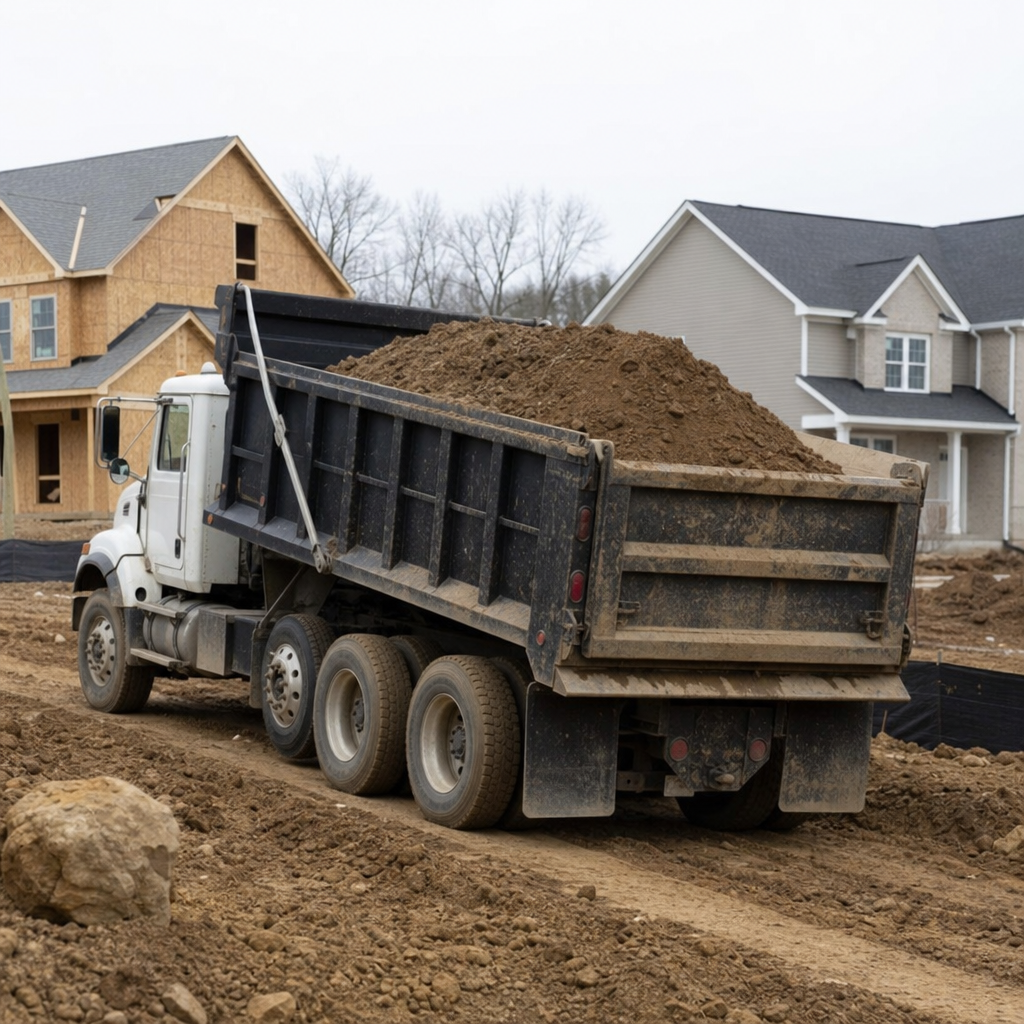
Matching the right hauler to the right material
Not every hauling company is set up for every type of load. Dirt, rock, gravel, and aggregate may seem similar from a distance, but they behave differently in a truck and on a jobsite. Wet clay can be heavy and sticky. Loose topsoil may shift differently. Large rock may require sturdier equipment and careful dumping.
If you are searching for rock hauling companies near me, ask whether they regularly handle the size and weight of stone your project requires. Large rock, riprap, and boulders can demand different loading equipment than standard gravel or fill dirt. A company that mostly hauls light landscape material may not be the best choice for heavy quarry rock.
For gravel hauling, ask about material source, delivery timing, and whether the hauler can tailgate spread if needed. Tailgate spreading is not always available or appropriate, but when it is, it can reduce labor and help distribute material along a driveway or lane. If you are comparing gravel haulers near me, this kind of practical detail can help you decide who understands the work.
Aggregate hauling can include sand, crushed stone, recycled concrete, road base, and other materials used for construction and drainage. When looking for aggregate hauling services near me, be clear about whether you need pickup, delivery, removal, or a combination. The more specific you are, the easier it is for the hauler to recommend the right truck, route, and schedule.
How do you compare hauling estimates without choosing on price alone?
Compare estimates by looking at what is included, how the hauler calculates volume or time, whether disposal or material costs are separate, and how clearly the company explains scheduling and site requirements. The lowest quote is not always the best value if it leaves out dump fees, travel time, extra trips, or delays caused by poor planning.
A useful estimate should answer basic questions without making you guess. You should know whether pricing is based on the load, ton, cubic yard, hour, or project. You should also know what happens if the material volume is higher than expected or if the site is harder to access than described.
Before choosing between dirt hauling companies near me, review each estimate for these details:
Material type: Does the quote clearly state whether the job involves dirt, rock, gravel, aggregate, or mixed material?
Service direction: Is the company removing material, delivering material, or doing both?
Truck capacity: Does the estimate mention truck size or expected number of trips?
Disposal or source fees: Are dump fees, quarry charges, or material costs included or separate?
Access assumptions: Does the hauler know about slopes, low branches, soft ground, narrow gates, or overhead wires?
Timing: Is there a realistic arrival window and plan for coordinating with equipment operators or crews?
Extra charges: Are wait time, additional trips, fuel, or difficult loading conditions explained upfront?
A professional estimate does not need to be complicated, but it should be specific enough to protect both sides. If a provider refuses to discuss the details, keeps changing the scope, or cannot explain what affects the final cost, keep looking.
Site access can make or break the job
Even a simple hauling job can become difficult if the truck cannot safely reach the loading or dumping area. Before scheduling, think through how a loaded truck will enter, turn around, dump, and leave. A large truck needs more room than a pickup, and the ground must be stable enough to support the weight.
Take note of tight corners, steep driveways, low tree limbs, soft lawns, overhead utility lines, septic areas, and nearby parked vehicles. These details matter because the driver may have to refuse an unsafe dump location. That is not poor service; it is responsible hauling.
If possible, send photos or a short video of the site before the truck arrives. Include the entrance, staging area, and exact place where material should be loaded or dropped. Clear visuals help the hauling company plan correctly and may prevent a wasted trip.
Clean communication prevents project delays
Hauling is often one part of a larger project, so timing matters. Dirt removal may need to happen right after excavation. Gravel delivery may need to arrive before a crew can grade and compact. Rock delivery may depend on equipment being available to place it.
Good communication starts with giving the hauler accurate information. Describe the material, estimated amount, location, and preferred schedule. If you do not know the volume, say so and ask what measurements or photos would help.
A good hauler should also communicate clearly with you. They should confirm the address, access instructions, arrival window, and any conditions that could change the plan. Weather, traffic, disposal site hours, and quarry wait times can affect hauling work, but a professional provider keeps you informed instead of leaving you wondering.
Preparing before the truck arrives
A few simple steps can make the hauling process faster, safer, and less stressful. Preparation is especially important if the site is residential, shared with other contractors, or located on a busy road.
Use this checklist before your scheduled hauling service:
Mark the loading or dumping area clearly with cones, flags, stakes, or another visible marker.
Move vehicles, trailers, equipment, toys, bins, and loose items out of the truck path.
Confirm that gates are unlocked and wide enough for the expected truck.
Tell the hauler about soft spots, septic fields, irrigation lines, or underground utilities.
Keep pets, children, and bystanders away from the work area.
Make sure someone on site can answer questions if the driver needs direction.
Avoid changing the dump location at the last minute unless the driver confirms it is safe.
These steps may seem basic, but they reduce confusion and help the driver complete the job efficiently. They also protect your property from avoidable damage.
Warning signs that a hauler may not be reliable
Most local hauling providers want to do good work, but not every option will be the right fit. Be cautious if a company gives a price without asking what material is involved or where the truck needs to go. Hauling depends heavily on weight, access, distance, and timing, so a quote with no questions may not hold up.
Other warning signs include vague scheduling, poor communication, unwillingness to discuss disposal, and pressure to book before you understand the terms. If the company cannot explain what happens if more loads are needed, you may be surprised later. If they seem unfamiliar with the type of material you need moved, look for a more experienced option.
Online reviews can help, but read them carefully. Look for comments about punctuality, careful driving, accurate estimates, and how the company handled problems. A perfect-sounding listing matters less than consistent evidence that the hauler communicates well and completes jobs responsibly.
The right local search starts with the right questions
Typing dirt hauling near me into a search bar is a practical starting point, but your follow-up questions determine whether you find the right provider. The same is true when searching for rock hauling near me, gravel delivery, or aggregate hauling. Local results are only useful when you know how to evaluate them.
Before you call, write down what you need moved, where it is going, and when it needs to happen. If you are unsure about load size, take measurements or photos. If the project involves delivery, know where the material should be placed and whether a large truck can safely access it.
Reliable hauling is about more than moving material from one place to another. It affects scheduling, site safety, budget control, and the quality of the finished project. By choosing a hauler who asks good questions, explains the estimate, and understands your material, you give your project a better chance to stay on track from the first load to the last.