
A good driveway starts below the tires. The right stone helps create a surface that drains well, supports daily traffic, and looks clean from the road. If you are searching for driveway stone near me or comparing local gravel options, the best choice usually depends on your soil, slope, budget, and how polished you want the finished driveway to look.
What makes a good driveway stone?
A good driveway stone is durable, angular, properly sized, and suited to the layer where it will be used. The base needs larger stone that locks together and supports weight, while the top layer often uses smaller gravel rocks that create a smoother driving surface. A driveway that uses the wrong stone may shift, rut, wash out, or feel loose underfoot.
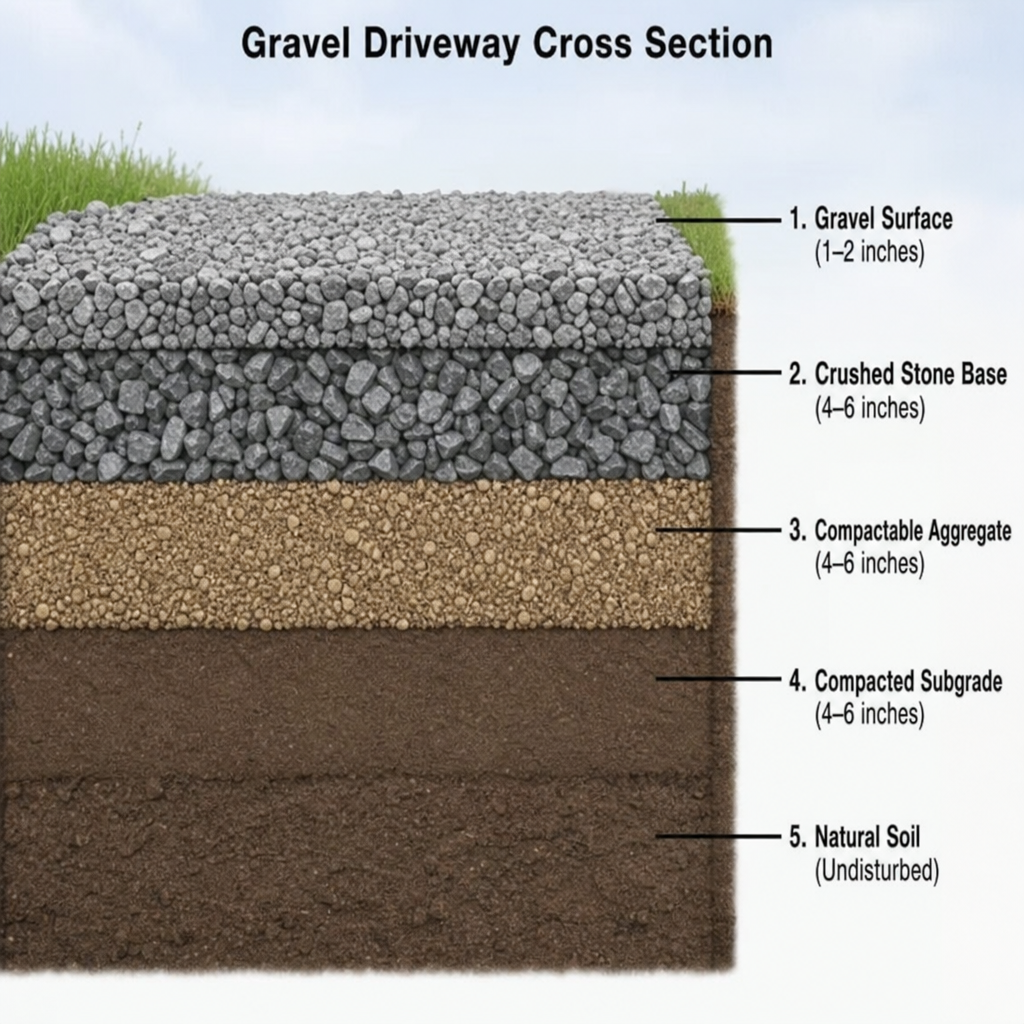
The most dependable gravel driveways are built in layers. Each layer has a job: the lower layer provides strength, the middle layer improves stability, and the surface layer gives the driveway its finished appearance. When people search for driveway gravel near me, they often focus on color or price first, but size and shape matter just as much.
Angular stone is usually better than rounded river rock for driveways because its edges interlock when compacted. Rounded stones may look attractive, but they can roll under tires and migrate out of place. If your driveway handles frequent vehicles, trailers, deliveries, or steep grades, stability should come before decorative appeal.
The main driveway stone options
Driveway materials are often described by size, purpose, or local naming conventions. One supplier may use terms like crushed stone, crusher run, dense grade, or road base, while another may describe similar materials differently. That is why it helps to explain your project when you call or visit a supplier instead of relying on product names alone.
Crushed stone for strength and stability
Crushed stone is one of the most common driveway materials because it has sharp edges that compact well. It is especially useful for base layers and driveways that need to support regular vehicle traffic. Larger crushed stone can create a strong foundation, while smaller crushed stone can be used closer to the surface.
This option is practical for both new driveways and resurfacing projects. If your existing driveway has soft areas, potholes, or drainage issues, adding only a thin decorative layer may not solve the problem. A stronger crushed stone base may be needed before the surface layer goes down.
Crusher run and dense-grade gravel
Crusher run, sometimes called dense-grade aggregate or road base, usually contains a mix of stone sizes and fine particles. The fines help fill spaces between larger stones, allowing the material to compact into a firm surface. This can be a strong choice for driveways that need a solid, packed finish rather than a loose stone look.
The tradeoff is drainage. Because fine particles fill voids, crusher run may shed water differently than clean stone. On flat or poorly drained sites, you may need to think carefully about grading, ditches, or a separate drainage layer.
Clean stone for drainage
Clean stone contains little to no fine material, so water can move through it more easily. It is often used where drainage is a priority, such as low areas, edges, or base sections that need to move water away from the driveway. Clean stone can also reduce mud when placed over properly prepared ground.
Because it does not contain many fines, clean stone may not compact into as tight a surface as dense-grade material. That does not make it bad; it simply means it has a different job. For many driveways, a combination of clean stone and compactable gravel creates the best result.
Pea gravel and decorative stones
Pea gravel and other rounded decorative stones can look attractive, especially near walkways, garden borders, and low-traffic areas. For driveways, however, they are usually better used with caution. Their smooth shape makes them more likely to shift, scatter, and form loose areas.
If appearance is your top priority, ask a local supplier about angular decorative stone rather than rounded gravel. You may be able to get a color and texture you like while still choosing a material that performs better under tires.
Coarse gravel has a clear purpose
Coarse gravel is useful when a driveway needs structure, drainage, or a reliable base under the surface layer. Larger stone creates voids that help with water movement and load distribution, especially when placed over prepared soil and compacted in lifts. It is not always comfortable as the final surface, but it can be essential underneath.
A common mistake is trying to fix a weak driveway with only small surface gravel. If the ground below is soft, wet, or poorly shaped, the new stone can sink into the soil or mix with mud. Coarse gravel can help create separation and support, particularly when combined with proper grading and, in some cases, a geotextile fabric.
Think of coarse stone as the structural part of the driveway. It may not be the layer you admire every day, but it helps the visible surface last longer. If you are unsure whether you need it, describe your soil conditions and traffic level when asking local suppliers for recommendations.
How do you choose the right gravel size?
Choose gravel size based on the layer, not just the look. Larger stone is better for the foundation, mid-size gravel helps build a stable driving layer, and smaller angular gravel often works best on top. A driveway that uses one material for every layer can still work in some situations, but layered construction usually performs better.
Here is a simple way to think about size and purpose:
- Large base stone: Best for new construction, soft areas, drainage support, and heavy-use driveways.
- Medium crushed gravel: Useful for building up the driveway body and improving load-bearing strength.
- Dense-grade or crusher run: Good for a firm, compacted surface when drainage is already handled.
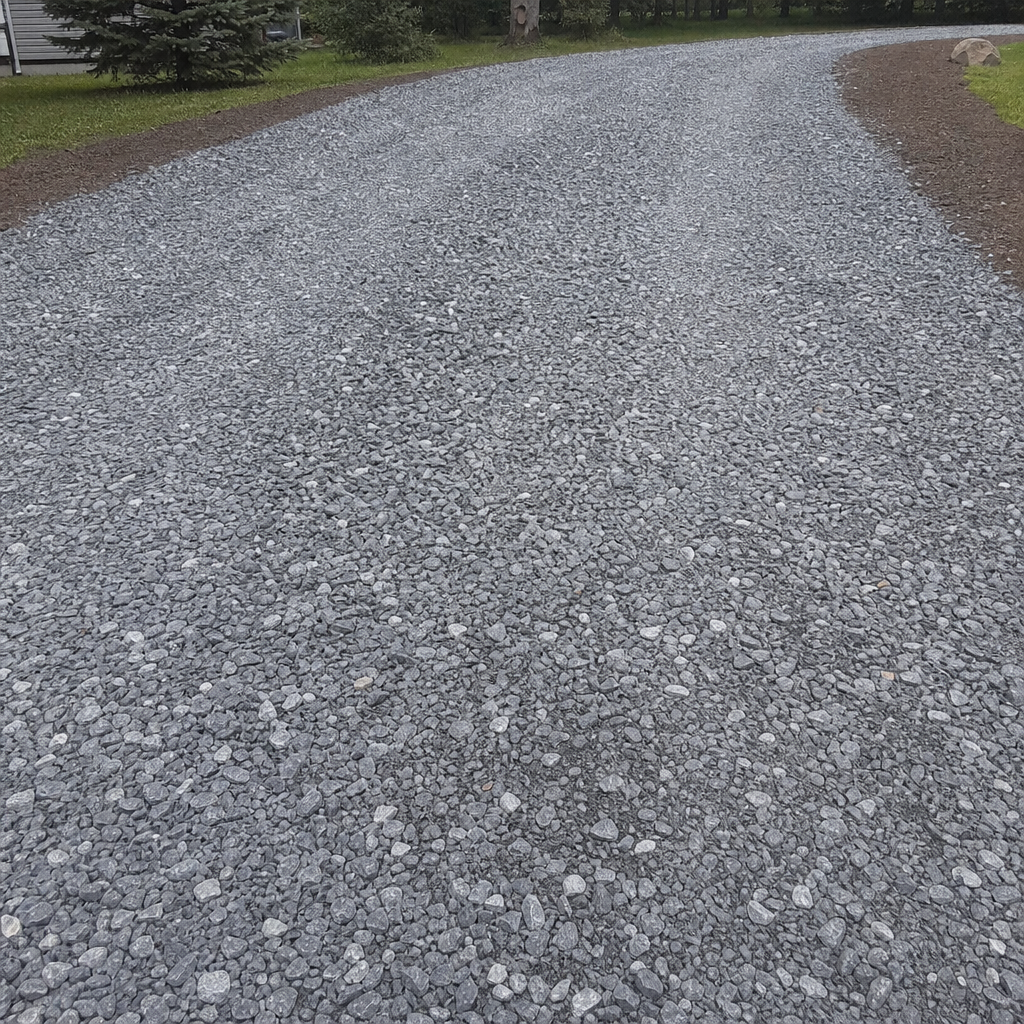
- Small angular surface stone: Helpful for a neater finish and easier walking or snow removal.
- Decorative gravel rocks: Best when appearance matters, but they should still be angular enough for vehicle use.
Local conditions matter. A driveway in a rainy area, a clay-heavy yard, or a steep rural lane may need a different approach than a short, flat driveway on well-drained soil. Before ordering, measure the driveway length and width, note any low spots, and decide whether you are topping off an existing surface or rebuilding from the base.
Drainage matters as much as the stone
Even high-quality driveway stone can fail if water has nowhere to go. Water softens soil, carries away fine particles, and creates ruts when vehicles pass over weak areas. A durable gravel driveway should be shaped so water moves off the surface rather than sitting in the wheel paths.
A slight crown in the center can help shed water to the sides. On sloped driveways, diversion features may be needed to slow runoff and prevent washouts. In low spots, clean stone or drainage improvements may be more important than adding another layer of surface gravel.
Before placing new material, look at your driveway after a rain. Puddles, channels, and muddy edges are clues. Fixing those issues first can save money because the new stone is less likely to disappear into soft ground or wash toward the road.
Where should you buy driveway gravel?
The best place to buy driveway gravel is usually a local stone yard, landscape supply company, quarry, or aggregate supplier that understands regional materials. If you are searching where to buy gravel for driveway or where to buy gravel near me, look for suppliers that can explain stone sizes, delivery options, and which materials are commonly used for driveways in your area.
Local suppliers often use familiar terms based on nearby quarries and regional construction practices. Bring clear details so they can guide you well:
- Driveway dimensions: Length, width, and desired depth help estimate quantity.
- Project type: New driveway, resurfacing, pothole repair, or drainage improvement.
- Vehicle use: Cars only, work trucks, trailers, RVs, or heavy deliveries.
- Site conditions: Flat, sloped, muddy, sandy, clay soil, shaded, or wet.
- Preferred finish: Firm and practical, decorative, rustic, or easy to maintain.
Search terms like dirt and gravel near me can help you find suppliers that offer multiple bulk materials, including fill dirt, road base, crushed stone, and topdressing gravel. That can be helpful if your project needs grading before stone is installed. However, do not assume any “gravel” listing is right for a driveway; confirm the material, size, and intended use before ordering.
Questions to ask before ordering
Ordering stone is easier when you know what to ask. A short conversation with a supplier can prevent mismatched materials, under-ordering, or paying for a decorative product when you need a structural one.
Use this checklist before you schedule delivery:
- What stone do you recommend for a driveway in this area?
- Is this material angular or rounded?
- Does it contain fines, or is it clean stone?
- Is it better for a base layer, surface layer, or both?
- How deep should it be installed for my project type?
- Can it be compacted, and should it be placed in layers?
- How much material do I need for my driveway dimensions?
- Is delivery available, and where will the load be dumped?
If you plan to spread the stone yourself, think carefully about access and equipment. A full delivery pile is heavy and time-consuming to move by hand. For larger projects, renting equipment or hiring an installer may be more practical than trying to spread everything with a shovel and wheelbarrow.
Maintenance keeps gravel driveways working
A gravel driveway is not completely maintenance-free, but regular attention can keep it functional and attractive. Over time, traffic pushes stone outward, rain moves fines, and low areas begin to collect water. Small fixes are easier than waiting until the driveway needs major repair.
Rake loose stones back toward the center or wheel paths as needed. Fill potholes by removing soft material first, then adding suitable stone and compacting it well. Simply dumping gravel into a wet hole may create a temporary improvement, but the weak spot often returns.
Plan to refresh the surface periodically based on traffic, weather, and site conditions. A driveway used by several vehicles every day will need more attention than one used occasionally. The goal is to preserve the shape of the driveway, maintain drainage, and keep enough surface stone in place to protect the base.
A better driveway starts with the right local material
Choosing driveway stone is not only about finding the cheapest load of gravel. It is about matching the material to the job: strong base stone where support is needed, compactable gravel where firmness matters, clean stone where drainage is critical, and an appropriate surface layer for daily use.
When you search for driveway stone near me, compare more than distance and price. Ask what the material is designed to do, how it should be installed, and whether it fits your soil, slope, and traffic. With the right gravel rocks and a little planning, your driveway can look cleaner, drain better, and stand up more confidently to everyday use.